What Is the Difference Between SSAW and LSAW Steel Pipes?
- Share
- Issue Time
- Oct 28,2026
Summary
Steel pipes play an essential role in construction, energy, infrastructure, and industrial projects. However, different welding methods affect pipe performance, production efficiency, and project costs. SSAW and LSAW steel pipes both use submerged arc welding, but they differ in weld direction, manufacturing processes, and typical applications.

Steel pipes play an essential role in construction, energy, infrastructure, and industrial projects. However, different welding methods affect pipe performance, production efficiency, and project costs. SSAW and LSAW steel pipes both use submerged arc welding, but they differ in weld direction, manufacturing processes, and typical applications.
As a leading Chinese steel pipe manufacturer, Tianjin Yuantai Derun Pipe Manufacturing Group Co., Ltd. provides reliable welded steel pipe solutions for global buyers.
What Are SSAW and LSAW Steel Pipes?
What Is SSAW Steel Pipe?
SSAW stands for Spiral Submerged Arc Welded steel pipe. Manufacturers form steel strips into spiral shapes and weld the seams using submerged arc welding.
This process creates a helical weld along the pipe body. It also allows manufacturers to produce large diameter pipes from relatively narrow steel strips.
Key features include:
1.Spiral welding seams that run around the pipe body.
2.Flexible production for various diameters and wall thicknesses.
3.Efficient material utilization and manufacturing flexibility.
4.Common applications in water transportation, piling, and infrastructure projects.
SSAW steel pipes offer practical advantages for projects requiring large diameter pipes and competitive production costs.
What Is LSAW Steel Pipe?
LSAW stands for Longitudinal Submerged Arc Welded steel pipe. Manufacturers form steel plates into cylindrical shapes and weld the seams along the pipe's length.
The JCOE process uses progressive forming to create the pipe shape before welding. Manufacturers can also use other forming methods, depending on their equipment and production requirements.
Key features include:
(1)Longitudinal weld seams that follow the pipe axis.
(2)Production using steel plates with controlled forming processes.
(3)Suitability for demanding structural and pipeline applications.
(4)Potential for thick walls and high dimensional accuracy.
LSAW steel pipes often serve oil and gas transportation, offshore engineering, and major infrastructure projects. However, buyers must confirm each pipe's specifications and applicable standards.

What Are the Main Differences Between SSAW and LSAW Steel Pipes?
Although both types use submerged arc welding, their production methods create important differences.
① Welding direction: SSAW pipes have spiral seams, while LSAW pipes have longitudinal seams.
② Raw materials: SSAW production typically uses steel coils, while LSAW production commonly uses steel plates.
③ Manufacturing process: SSAW forms continuous spiral pipes, while LSAW forms pipes from plates before welding.
④ Diameter flexibility: SSAW supports flexible diameter production, while LSAW offers strong control over plate dimensions and pipe geometry.
⑤ Typical applications: SSAW commonly serves water projects, piling, and infrastructure, while LSAW frequently serves demanding pipelines and heavy engineering.
⑥ Cost considerations: SSAW can offer economical solutions for suitable specifications, while LSAW may justify its cost through project requirements.
Neither process automatically guarantees superior strength. Material grade, wall thickness, weld quality, manufacturing controls, and testing determine the final pipe's performance.
How Should Buyers Choose Between SSAW and LSAW Steel Pipes?
The right choice depends on operating conditions, project specifications, and budget. Buyers should evaluate several factors before placing an order.
1.Application requirements: Identify whether the pipe will support structures, transport fluids, or serve energy projects.
2.Design pressure: Confirm pressure requirements and applicable engineering standards for pipeline applications.
3.Material grade: Select steel grades that meet the project's mechanical and chemical requirements.
4.Dimensions: Check outside diameter, wall thickness, length, and dimensional tolerances.
5.Inspection requirements: Confirm weld inspection, testing procedures, and documentation requirements.
6.Total project cost: Compare material prices, transportation, installation, inspection, and long-term maintenance.
Working with an experienced LSAW steel pipe supplier helps buyers match manufacturing capabilities with technical specifications. A qualified supplier should also provide clear documentation and consistent communication throughout the order process.
Why Choose Tianjin Yuantai Derun Steel Pipes?
Established in March 2002, Tianjin Yuantai Derun Pipe Manufacturing Group Co., Ltd. serves customers across global industrial markets. We combine advanced production capabilities, technical expertise, and efficient logistics to support diverse steel pipe requirements.
Our manufacturing advantages include:
Three spiral welded pipe production lines and advanced JCOE/LSAW/SSAW welding capabilities.
1.A broad portfolio covering spiral welded pipes, LSAW steel pipes, ERW pipes, and structural hollow sections.
2.Production facilities supported by more than 2,200 employees and over 100 technical patents for hollow structural sections.
3.Raw materials sourced primarily from established steel producers, including HBIS, Shougang Group, and Baosteel.
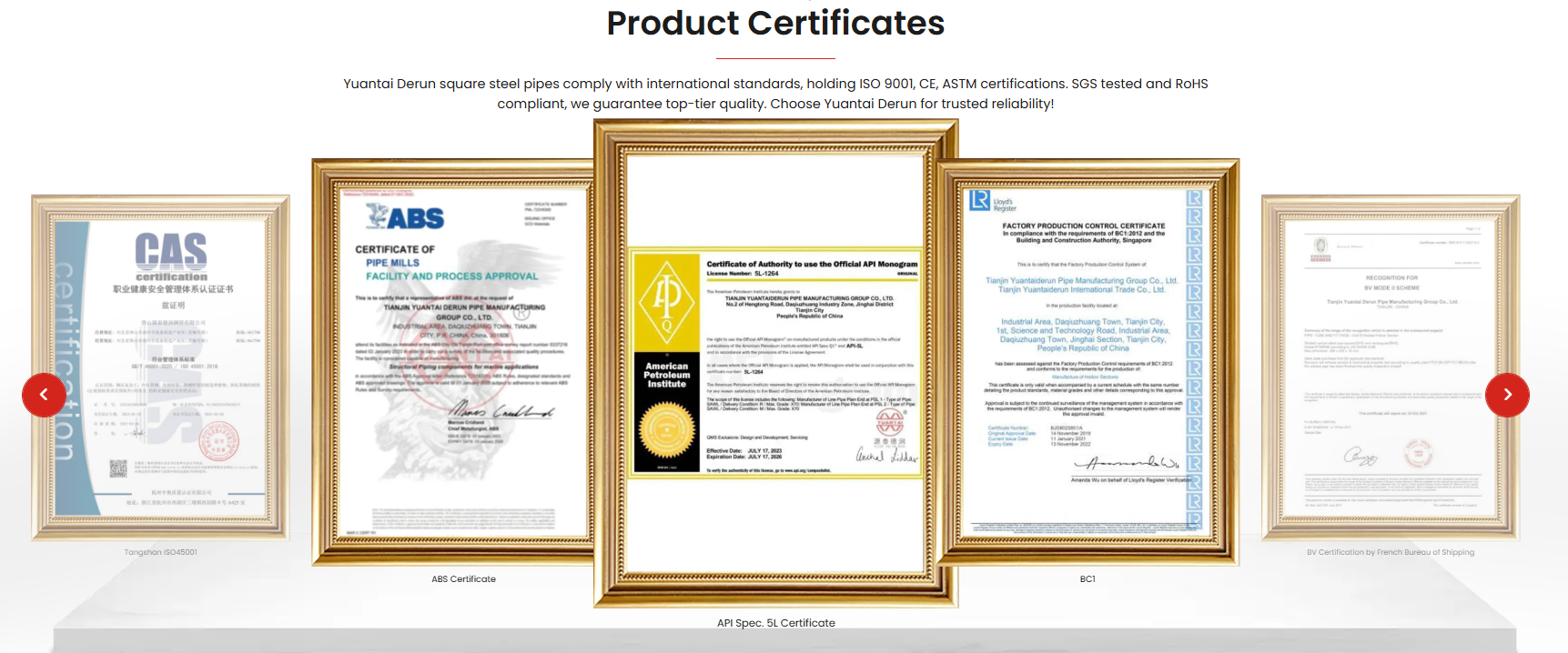
4.Quality and management certifications covering ISO9001, ISO14001, EU CE, BV, JIS, DNV, and ABS requirements.
5.A strategic location in Tianjin, approximately 40 kilometers from Tianjin New Port, supporting efficient international shipping.
As an experienced steel pipe manufacturer, we focus on product quality, production efficiency, and reliable customer service. We help buyers identify suitable products according to their drawings, technical specifications, and project requirements.
Contact Us for Your Steel Pipe Requirements
Choosing between SSAW and LSAW steel pipes becomes easier when you understand their manufacturing differences and intended applications. SSAW offers flexible production for many large diameter projects, while LSAW provides reliable solutions for demanding specifications.
Tianjin Yuantai Derun welcomes global distributors, contractors, and project owners to explore our steel pipe products. Contact our team to discuss specifications, request a quotation, and receive professional support for your next project. We are committed to delivering quality products, dependable service, and efficient supply chain solutions for customers worldwide.